Blend, baby, blend
This year for my birthday, I received a gift I’ve been wanting for some time now. There aren’t many big ticket items out there that I desire, but this is one thing I had begun to talk about to friends, family, co-workers, anyone who would listen. I may have even told strangers. I’d first heard of this item through my brother and was beginning to have what I referred to as a serious case of “blender envy.”
Yes, that’s right. The item I coveted was a blender. What kind you ask? A serious one. There seem to be two prevailing “high end blender” camps out there and I fall on the Blendtec side of things (Vitamix is the other). This thing has settings for smoothies, soups, sauces and spreads. While not recommended to try at home, it will even blend golf balls. It has revolutionized our lives. I would go as far as to say I love this blender. May seem a little Enemy of the State, but seriously, this blender is amazing. And after way too many episodes where I only ended up uttering curses at our previous two blenders – brands to remain unnamed – it was time to splurge.
Most of the blender’s work thus far has been fruit drinks in the morning. My husband has concocted a wide variety of combinations, experimenting with strawberries, pineapple, raspberries, mangoes, apples and more. It is fantastic how little work is required and on items like kiwi, you don’t even have to remove the peel – which I have learned is actually quite high in fiber and very good for you. This has been a really great way for us to ensure regular fruit intake, especially on days when time is tight.
Tonight, however, I ventured into the world of soup. The most amazing part of making soup with this blender is the fact that it gets going so fast that the friction – or whatever physics are going on – actually heats it up. No cook soup. Genius. I’ve made one other soup so far, based on a recipe in the handy cookbook that comes with the blender, and tonight I tried a modified version of the “Bacon Cheddar Potato Soup.”
Here is the recipe: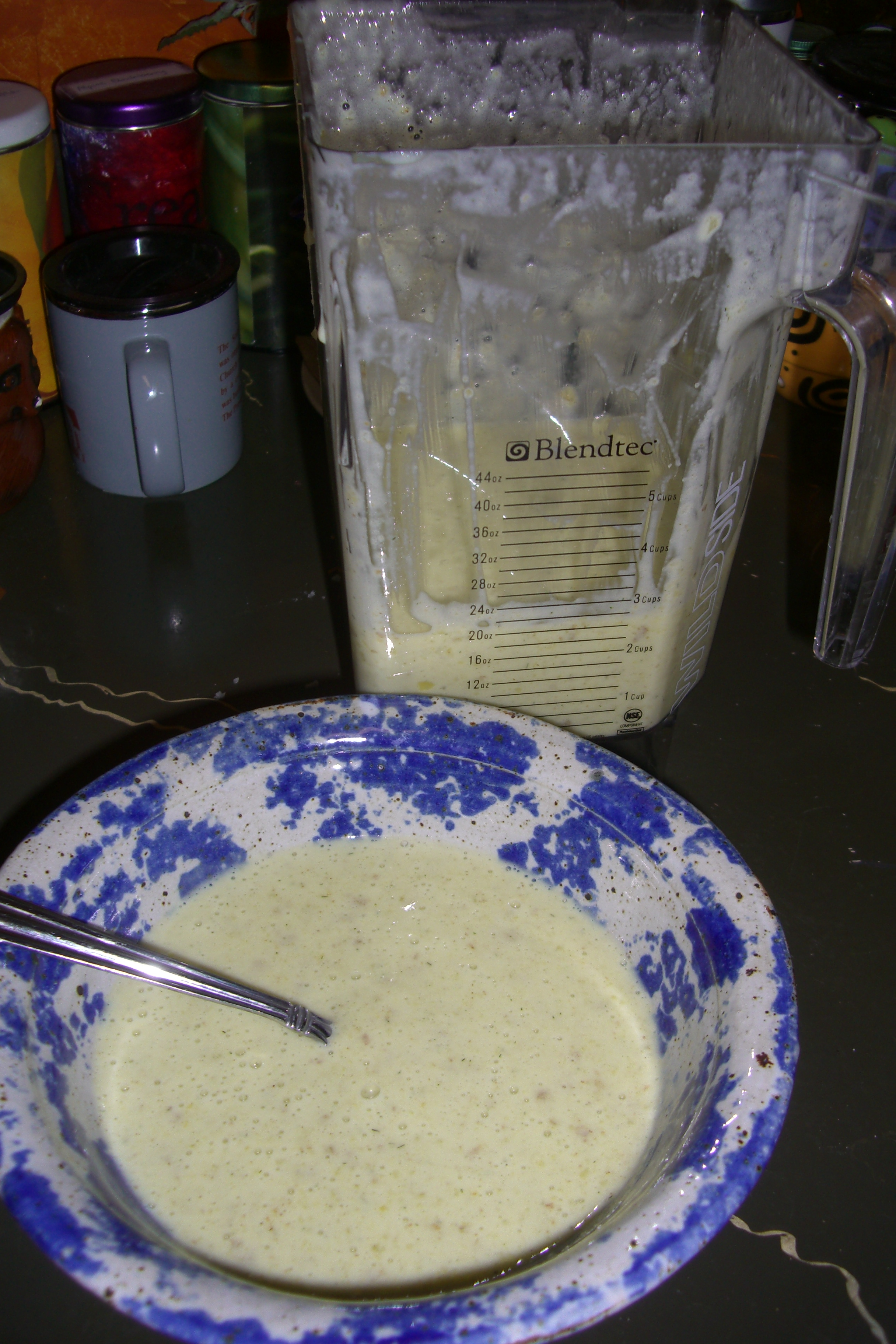
- 2 c milk
- 1 medium potato – baked and cut in half
- ½ c cheddar cheese – shredded
- 1/4 c onion – steamed
- 1/4 tsp dill weed
- 1/4 tsp rosemary
- 1/2 tsp salt
Directions: Place above ingredients into blender jar and secure the lid. Press the Soups button. If soup is not hot after first cycle, press the Soups button a second time.
Add:
- 3 slices bacon – crisped and broken into bits
- 1 baked potato – cut in half
Directions: Press the Pulse button approximately 5 times to blend in added ingredients.
MY NOTES: The most obvious change for this pig free diet was removing the bacon, but I also had to improvise on the milk. As I mentioned in my post about French Toast a few weeks ago, we rarely have milk in our house, so alternatives require some creativity. Tonight my two cups of milk looked like this: a fourth cup half and half, a fourth cup plain yogurt and one and a half cups water. Might sound weird, but it worked. In addition, I didn’t have enough cheddar so I used some brick cheese we picked up in Wisconsin and it added a nice creamy flavor. Also adding to the flavor was a bit of parsley I had picked from our garden and had left over from dinner a few nights ago.
The other thing I learned tonight is that baking potatoes in a toaster oven – even when you’re using little potatoes and have the temp at 375º – isn’t the most time efficient idea. I could have popped them in the microwave for a quick cook, but the more I learn about microwaves and how they affect our food, the more I want ours to die so I can take it to the recycler and be done with it forever. So, in the future, I think I’ll need to plan ahead and either start them in the toaster oven earlier or find some other stuff that needs baking and fire up the regular oven for a bit.
And for a final few thoughts. I love dill – my favorite soup is Borscht – so this recipe caught my eye right away. Even with only a fourth of a teaspoon, the dill did not disappoint. And, while August 1 may seem like an insane day to have a hot creamy soup, today we had a huge rain storm and it was rather overcast much of the day, so it seemed appropriate. Overall, this soup had a wonderful rich taste and I look forward to blending up more potato soup combinations in the future.
Un-beet-able
It’s 9:15 pm and I’ve just now finished eating dinner. I came home later than planned and was then distracted by other things, so by the time I got around to contemplating my options, I needed something fast. Having already eaten a salad for lunch, I steered clear of the lettuce, but beyond that, pickings were slim.
Sliced cheese and tortilla chips got me out of more than one dinner fix this winter, but with all the veggies now available, I felt too guilty to go that route. There is plenty of pasta in the cupboard, but with no pesto or sage butter, that didn’t sound appealing. And roasted beets, while amazing (and a favorite), are too time consuming for as late as I was starting.
Which is how I arrive at beet greens. Unlike the beetroot, the greens cook up very quickly. Though largely viewed as inedible and quickly destined for the compost bin in most households, being creative with beet greens is not only healthy for you, but also helps cut down on our food waste! Tender much like spinach and swiss chard, these nutrient packed beauties are ready and waiting for your next menu.
I’ve done beet greens a few different ways in the past; usually it involves oil, garlic and some method of steaming or blanching the leaves. Wanting something a bit different this time, I turned to my trusty search engine and in the first page of results, came upon this lovely Beet Greens Salad recipe. While it still involved the aforementioned ingredients, this recipe has a few twists to what I’ve done before.
To make this salad, you will need:

Beet Green Salad
- Greens from 2 bunches of beets
- Salt and pepper, to taste
- 3 Tbsp olive oil
- 1 clove garlic, finely chopped
- 2 Tbsp lemon juice
- 1/4 red onion, very thinly sliced
- 1 ripe tomato, coarsely chopped
- 1/4 c slivered almonds, toasted until golden
1. Rinse the greens thoroughly in several changes of water.
2. Bring a large pot of salted water to a boil. Add the greens. Blanch 1 minute. Drain and rinse with cold water. With your hands, squeeze out the excess liquid. Chop the greens coarsely.
3. In a large skillet, heat 2 tablespoons of the olive oil. When it is hot, add the greens, garlic, salt, and pepper. Cook, stirring constantly, for 2 minutes or until the greens are tender but still bright colored.
4. Transfer the greens to a bowl.
5. In a small bowl, whisk the lemon juice, salt, pepper, and remaining 1 tablespoon olive oil. Pour the mixture over the greens and toss well. Add the onion, tomato, and almonds. Toss again. Taste for seasoning and add more salt and pepper if you like. Adapted from Justin Melnick, executive chef of Tomasso Trattoria
MY NOTES: First, a comment on oil. Whenever a recipe calls for cooking with olive oil, I always substitute an oil with a higher smoke point, which is the temperature at which the oil begins to break down. Olive oil to breaks down around 200-250º and at that point can actually become toxic. Options like canola, safflower or sunflower oil are much better for any medium or high heat pan cooking. So, for this recipe, I used canola oil for sauteing the greens, but olive oil for the dressing.
The taste on this salad was absolutely phenomenal. The lemon really helps bring out more of the flavor of the greens, and the onions and tomatoes add some nice texture and taste contrast. I didn’t have any almonds, so I toasted up a handful of raw sunflower seeds, which worked well, though I’d love to try this again with almonds.
So, next time you get a bunch of beets at the farmers market, before you put them in the fridge, twist off the stems/leaves and put them in a separate bag. The roots will last for a long time, but don’t wait more than a few days for the best quality of the greens.
Enjoy!
Must…Stay…Organized.
I am pretty sure there are a hundred million recipes out there. Actually, that number probably isn’t big enough if you count all the treasures stored in grandma’s crusty recipe box, not to mention the ones in her memory. To say the least, there are a lot. And to top it off, there are a lot of them I want to try. I see them everywhere; in magazines, at grocery stories, in cookbooks, online, emailed from a friend, sometimes even on TV. And while the idea of a recipe binder with all the ingredients and instructions printed out on cards, neatly arranged by categories sounds nice, I’ve found it is impossible and impractical for my lifestyle.
So, enter the online organizer. I am sure there are a ton of options out there – I’d love to hear what you use – but I have found Springpad to be an effective one for me. You can actually use the program to organize all sorts of other things, but thus far I’ve stuck to recipes and restaurants. The great thing about this site is you can enter URLs from recipes you find online and it will pull the ingredients and directions into a nice bookmark. Manual entry is also an option. You can mark whether it is a recipe you want to cook or something you’ve tried already, and add a 1-5 star rating as well. There is a drop-down menu of “courses” if you find that organization method useful and you can also mark your recipes with helpful tags. I’ve found ones based on the ingredients (beets, arugula, couscous) or the style of cooking (vegetarian, gluten free, soup) to be most useful.
Regardless of what program you use, my advice is to start NOW. The more links that pile up in your email or pieces of paper that accumulate on your desk (admittedly, I have some waiting for me there right now), the more time consuming – and frustrating – it will be. Spend some time when you first start and get as many recipes entered as you can. Once you’ve done that, maintaining your online cookbook is easy – if you are committed to entering new ones regularly. And believe me, it’s worth it, because when the time comes to harvest my winter squash, I’ve already got fifteen tasty recipes ready and waiting.
You’re so pitty, oh so pitty
Last night my husband and I tag teamed, and we pitted, vacuum sealed and froze approximately fifteen pounds of cherries.
And how exactly did we come about fifteen pounds of cherries (actually eighteen, but we have to eat some fresh, of course)? Well, the same way I come about many large quantities of food things – through a friend who has a connection to a farmer. In the past we’ve purchased chickens, potatoes and pork this way. It is a lot of fun, kind of like anticipating a long awaited package in the mail. These cherries came through a friend of a friend we know at the Minnesota Food Association. A farmer connection they have in Washington had pesticide free cherries ready to pick and they needed a large enough order to make the shipment to Minnesota worthwhile.
That said, this post might raise some questions for readers who know me. Why is she buying cherries from Washington, doesn’t she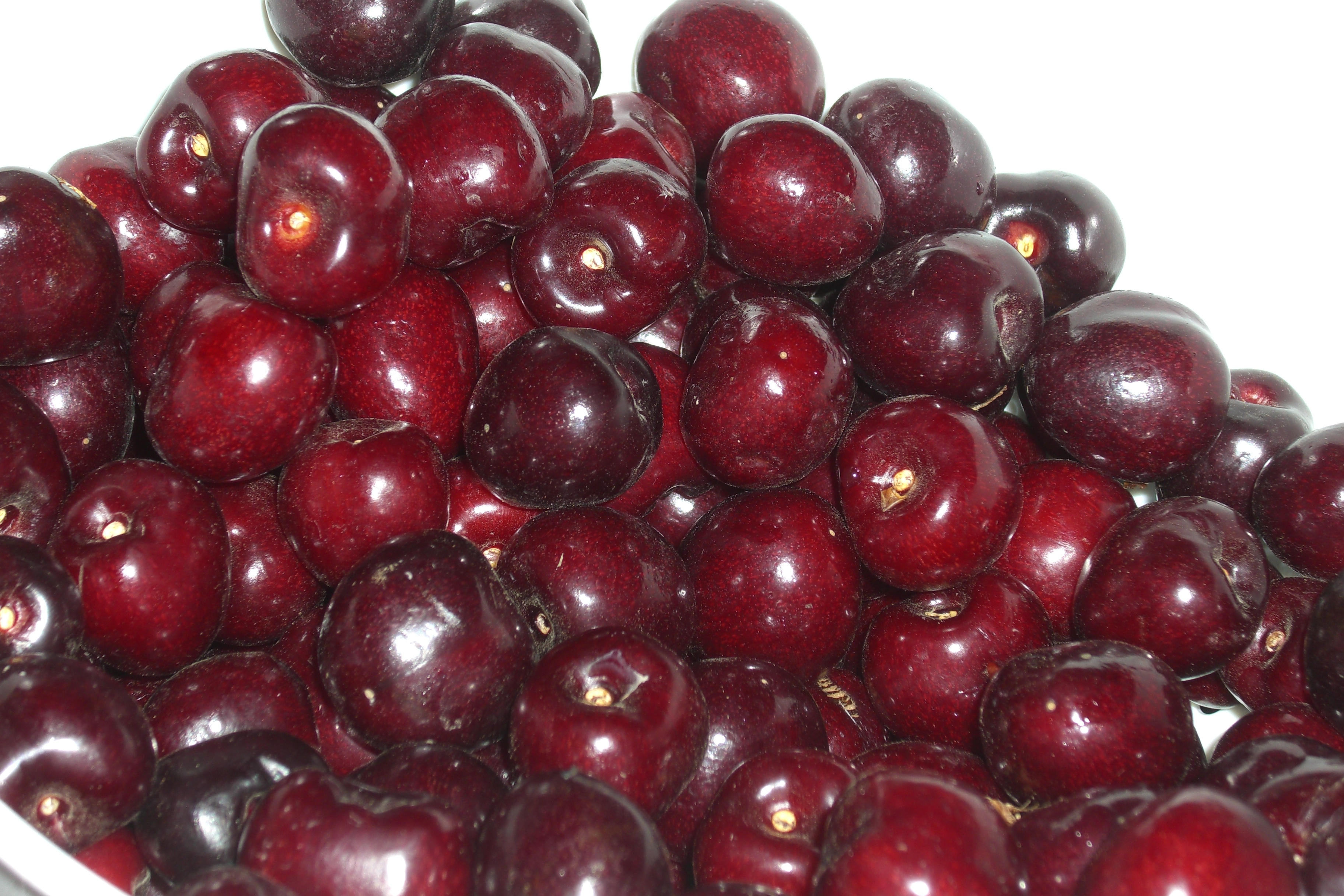 know they grow in the Midwest?
So, to “local” or “not to local”? That is a very good question. First, I am not a food purist. I do not believe it is realistic to expect that everyone will eat a nice, local, fresh, largely plant-based, organic, small farmer produced diet. At least not anytime in the foreseeable future. But I do believe that we all need to be thinking about our food, and no matter how small, we need to start making changes. Where your food is grown is only one aspect of a very complicated food system. I do believe a regionally and seasonally appropriate diet is something we should strive for, but I also enjoy a glass of orange juice many mornings throughout the year. It is not local to Minnesota and several months of the year it isn’t seasonal in Florida either. But again, if there is one thing you should learn from this blog, perfection or any notion of it, should be your last goal with food. Education should be first.
Knowing the cherries were coming from a small producer who did not spray – something I’ve found difficult to find in the cherry world – we decided this option fit our criteria for a “yes” in the food sourcing department. And at less than half the price of certified organic cherries at Whole Foods, it also fit a bit better in the budget. Not that I think I shouldn’t pay a fair price for food – it is one of the largest expenditures in our house – but there is paying a fair price and there is paying for the luxury of shopping at certain stores. But I’ll stop there, the cost of food is a whole other can of worms I’ll discuss another day.

Vacuum sealing the cherries
So, back to the cherries. Cherry preserving is a pretty easy and straightforward process. Depending on the tools in your kitchen, you have a few options. The first step no matter what is to wash and pit. My mom gifted us with a hand held cherry pitter a few Christmases ago and the whole endeavor is made much simpler. I highly recommend making this purchase should you have any desire to be a serious cherry processor.
From my experience, the next step can go one of two ways. If you own a vacuum sealer, just filled the bags, vacuum, seal and freeze. Done. If you don’t, the best method is to put your cherries in a single layer on a cookie sheet. Then put the tray in the freezer and let the cherries, you guessed it, freeze. Once the cherries are solid, put them in plastic zipper bags or whatever containers you prefer. This pre-freeze method prevents the cherries from squishing and melding into a giant blob of red which is almost impossible to navigate come eating time.
Frozen cherries in our house are used for milkshakes, fruit drinks and in morning yogurt throughout the coming months. While they’re not Minnesota Grown, we can eat them knowing they were harvested, in season, from a place that is much closer to home than the alternative – cherries sold at Christmas time in the US may be coming all the way from Australia. So, if you’re in the US and you love cherries, now is the time to find them. If you only want to eat in season, then gorge yourself. Should you want to enjoy the harvest a little longer, try your hand at some preserving. Either way, enjoy!
French Toast – No milk? No problem.
My usual weekday breakfast consists of yogurt and granola with maybe some fruit, honey, agave or maple syrup. On weekends, when I have a little more time, I like to branch out into the world of eggs and other things that require cooking. This morning I woke up and decided it was time to make some French Toast.
One problem – no milk. We rarely use milk in our house – though other dairy products like half and half, cheese and ice cream are abundant – so this dilemma has come up before. Usually it involves a craving for a milkshake. This morning, however, I got two things in my head, 1) I was going to have French Toast for breakfast and 2) I was not going to go to the store to get milk. Internet search engine, here we come.
The solution I found was easy enough. Substitute the milk with yogurt and if you need to, add a little water. The recipe I ended up making was Honey Butter Yogurt French Toast.
 For this recipe, you will need:
2 eggs, slightly beaten
½ c of plain or vanilla yogurt
2 Tbsp honey
1/4 tsp of cinnamon
4 slices of bread (fresh or slightly stale)
4 Tbsp softened butter
The video with the recipe walks you through the directions, but it pretty closely mirrors making regular French Toast.
MY NOTES: I used plain yogurt, so I added a small bit of vanilla extract. At the prompting of several other recipes, I included about a tablespoon of water as well. The result, a delightfully tangy and sweet breakfast. The honey butter was an excellent and simple topping. A dollop of yogurt and dash of cinnamon, superb.
Rhubarb Ambrosia Betty
Sounds sassy doesn’t it? That and the fact that I love rhubarb meant I had to try it!
Found this recipe at a table the Seward Co-op had at a recent farmers market.
Rhubarb Ambrosia Betty
5 c rhubarb, cut in ½” pieces 1 3/4 c sugar
1 Tbsp flour
1/4 tsp salt
1 ½ tsp grated orange rind (the zest)
Sections from 1 orange, cubed
4 c bread cubes (½”)
½ c melted butter or margarine
½ c shredded or flaked coconut
Mix rhubarb, sugar, flour, salt, 3/4 teaspoon orange rind and fruit. Add 2 cups bread cubes and 1/4 cup butter; mix. Put in a greased 8 x 8 x 2 inch pan. Combine the remaining bread cubes, butter, orange rind and coconut. Sprinkle over the top of the rhubarb. Bake in moderate oven (375 degrees) about 40 minutes, until browned. Serve warm. 6-8 servings.
MY NOTES: First, let me share with you that you will never find margarine in my kitchen. Butter, usually unsalted, that’s it. Why? Because I believe that all the fat I could ever eat from butter will still be healthier for me than the following combination: whey protein concentrate, soy lecithin, vegetable monoglycerides, potassium sorbate, vegetable color, artificial flavor, vitamin A palmitate, alpha-tocopherol acetate. I have a high preference for products with few ingredients. Less chemistry lab mumbo jumbo. There is definitely more to “healthy food” than fat and calories.
As for the recipe, did I say, I love rhubarb? Oh yes. I love that Minnesota has such fabulous amounts of rhubarb in the spring and early summer. This dessert (which even served as breakfast for me one day) had an excellent mix of sweet and tangy flavors. It was also a good way to use up some bread that was getting dry, but was not yet stale. Also, I used shredded coconut, I think I’d like flaked better next time. I highly recommend serving this with vanilla ice cream.
When baking, I usually do not alter sugar or salt amounts, however the baking in this recipe is only for the purpose of cooking the rhubarb and heating it all through, so I decreased the amount of sugar by a half cup. Still excellent. I believe that in general we rely much to heavily on sugar and salt to satisfy our taste buds when there are hundreds of combinations of herbs and spices – or in this case orange zest – that would be much more enjoyable and exciting. So, don’t be surprised in the future if I tell you again that I cut the amount or eliminated completely the sugar or salt listed.
Dirt therapy
I think gardening is the best form of therapy. It gives a person a chance to create and destroy, express both frustration and care and experience the consequences of our actions, which, fortunately for all of us, does includes forgiveness. And of course, there is always time to smile, give high fives and laugh. After a hard day at work, there is nothing like putting your hands in the soil.
Tonight I spent over two wonderful hours at a community garden I helped start this year. The Cottageville Park Neighborhood Garden is truly an amazing place. In the middle of the Blake Road Corridor, it is the intersection of many different communities of people. A lot of work has been done by several individuals from across these communities to make this garden happen, and it is exciting to see it bloom (yes, pun intended, thank you).
One of the best parts about this garden is the kids. They have so much energy and excitement. Sometimes it can be overwhelming, trying to answer ten questions at once, but though they say that Patience is a Virtue, so is enthusiasm, or at least I think it should be. The youth in the neighborhood are excited to see – and eat – the end product, but they haven’t been afraid to put in the time to help make it happen either. Several weeks ago, they planted seedlings and seeds in the freshly tilled soil. This was a brand new experience for many of them and they were eager to participate. Today they learned to carefully weed around those very plants they helped create, and each left with a bag of greens to take home and share with their family.

Harvest from my garden tonight
After biking home from the community garden, I stopped by my own garden, which my husband and I share with a friend. The tomatoes plants are growing strong and have started to fruit, the potatoes have overcome their attack by flea beetles and the first beets are ready for harvest. As I pulled a few carrots, I was reminded of gardening with my parents when I was a child. The lessons I learned in the garden may not have been obvious then, but they have planted themselves deep in my memory and have helped form who I am today. I can only hope that I am able to pass them on to some of the youth at the community garden this summer.
As a parting thought, I’ll say this: The thing about gardening is, it’s a universal and timeless language. If we’re willing to listen, it can speak across ethnicity, class, gender and age. Sure, some of us like to grow things that are a little spicier (I’m an arugula fan myself) and others prefer things on the milder side (Black Seeded Simpson has a very nice and delicate flavor), but put us all together and you get a fantastic salad. Cheesy analogy aside, however, it is important to keep this in mind when gardening. There are always chances to provide guidance to new gardeners – like the reason we stay on the paths, instead of walking through the beets – but there is a lot of time for experienced gardeners to learn as well. I may have a few years of gardening under my belt, but it only takes a few minutes gardening with youth to know that carrots will grow just fine, even if they’re not in a straight line.
Ya sure, ya betcha!
Today is the Norway Day celebration in Minneapolis, so I feel it is only appropriate to post something Norsk. I’m a quarter Norwegian myself (and a quarter Swede too), and my Scandinavian heritage has always been a significant part of my life.
Growing up, we learned about the food, the dress, where we came from and of course, we came to know of the infamous couple, Ole and Lena. One of my favorite memories is of my mom making dozens of krumkake (literally “crumb cake”) and enjoying them filled with canned whipped cream. This bit of our culture is something my mom passed on to me a few years ago with the gift of my very own krumkake iron – the modern electric kind versus the stovetop version of days past – and every year I make around 14-18 dozen to share with family and friends.
One of my favorite things about making krumkake is teaching the skill to others. You’ve got to have patience, but you’ve also got to be quick. You have to be willing to touch the really hot cookies as they come off the griddle. And you’ve got to be ok with breaking a few. I have given kitchen lessons to a few friends and last fall gave a demo to my Daughters of Norway lodge. Next weekend I’ll be teaching a class for Ingebretsen’s “Christmas in July,” and we’ll even be trying something new to me, Norwegian fortune cookies!
So, as we celebrate Norway Day today, I leave you with my favorite krumkake recipe, which came in the instruction manual with my Bethany Housewares krumkake iron.

Krumkake
Sticky Pomegranate Chicken Wings
Since the last two posts have been on the “heavy” side, this next edition is the first of MANY recipes. I absolutely love to cook – one of the main reasons I started this was several friends saying I should share my cooking photos on a blog – so mark this as a place you can check when you are not sure what the heck to do with another batch of beets.
Also, since the last post was mostly about meats I don’t eat, here’s a little treat for all the chicken lovers in the crowd. This one comes to us from Edible Twin Cities, a local edition of the Edible Communities magazines.
Sticky Pomegranate Chicken Wings
8 appetizer servings, or 4 main-dish servings
1⁄3 cup pomegranate molasses
1⁄4 cup soy sauce, preferably Japanese (such as Kikkoman’s)
3 tablespoons vegetable oil
3 tablespoons honey
1 tablespoon Dijon mustard
1⁄2 teaspoon finely minced garlic
2 to 3 pounds chicken wings/drumettes, excess skin trimmed
In a small saucepan, combine all ingredients except chicken wings. Heat just to boiling over medium heat, stirring occasionally. Remove from heat and set aside until completely cool. Place wings in large non-aluminum baking dish. Add half of the pomegranate mixture, turning wings to coat. Cover dish and refrigerate for 3 to 5 hours, turning wings occasionally; refrigerate remaining marinade separately. When you’re ready to cook, heat the oven to 375°F. Transfer wings to large, oiled broiler rack; the wings should not be crowded or they won’t cook properly. Discard marinade. Bake wings until tender and cooked through, 30 to 40 minutes, turning and brushing with reserved pomegranate mixture about every 5 minutes. For browner, crispier wings, turn on broiler at the end of cooking time, and broil the wings for 5 to 10 minutes, turning and brushing with pomegranate mixture once or twice. Serve hot, with plenty of napkins; they’re really sticky!
MY NOTES: I tried this once a while back using wings, as suggested. It was too much of a mess. So now, I use the sauce as a marinade for cut up chicken breast and cook it in a pan, not the oven. For a no-meat alternative, this is also excellent for veg stir fry. Whatever your preference, its delicious.
Eating animals
It’s a topic that many people don’t discuss in depth, though animals make up a good portion of our plates every day. Bacon for breakfast, turkey slices on a sandwich for lunch and a T-bone steak for dinner.
But what does it mean to eat animals? For some, nothing. For others, everything. For others of us, it’s somewhere in between. Since it’s bound to come up eventually, I’ll spend a little time now discussing my thoughts on eating animals. To be sure, this will not be exhaustive.
Growing up in Montana, my family was a hunting family. To be fair, I never went hunting myself, but we rarely ate “red meat” that didn’t come from an elk or deer. The few times my mom bought beef as a “special treat,” I remember noticing the fat sticking to the roof of my mouth and thinking it odd. But other than believing certain meat – or the way it was prepared – tasted good or bad, I was not discriminatory about the kinds of meat I ate until college.
Then came philosophy my junior year.
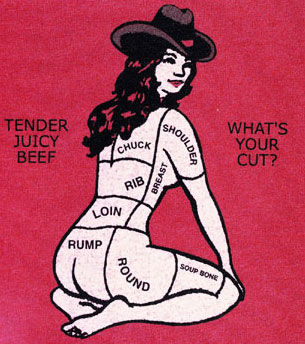
The topic was “Women and Philosophy” and the class examined how women have been viewed through the eyes of philosophy throughout history. Not exactly the place you would think you’d have a life changing experience in relation to meat. But alas, we read Carol Adam’s Neither Man nor Beast, watched a film featuring Peter Singer and discussed at length the relationship between the mistreatment of women and the mistreatment of animals and our planet. To this day, the most vivid image I have in my memory is a picture of a woman sitting on her haunches, with lines drawn on her body like cuts of meat.
So, as someone who grew up learning about the conservation of natural resources, it didn’t take long after I learned in class how much water a diet high in animals takes in comparison to one high in plants to get me thinking about what I should be eating. After further research, I made the decision in November 2004 to eliminate cows from my diet. Given that I didn’t eat much beef anyway, this wasn’t a hugely difficult task, but it started a whole lifetime of examining my plate.
Another significant part of my early look at eating animals was in January 2006 when I read a copy of Jane Goodall’s Harvest for Hope, given to me by my mom. The book discusses a myriad of food issues, but she introduced me to the term “flexitarian.” Many people look at me like I have two heads when I say the word, but it’s real, trust me. In fact, it was voted the most useful word of 2003 by the American Dialect Society. As I’ve gone about this “To Meat or Not to Meat” journey, I’ve found the flexitarian idea to be very helpful, especially when feeling like my diet could still use some work – like, is 75% vegetarian enough? Were those chickens fed antibiotics? Where did that fish come from? Fortunately, the goal for me with food is not perfection, but thoughtfulness – what a relief.
Not wanting this to become a novel, I will end here, full well knowing that this topic will emerge again – like when you start to notice there aren’t any recipes involving pigs.
 foodaccordingtoemily